
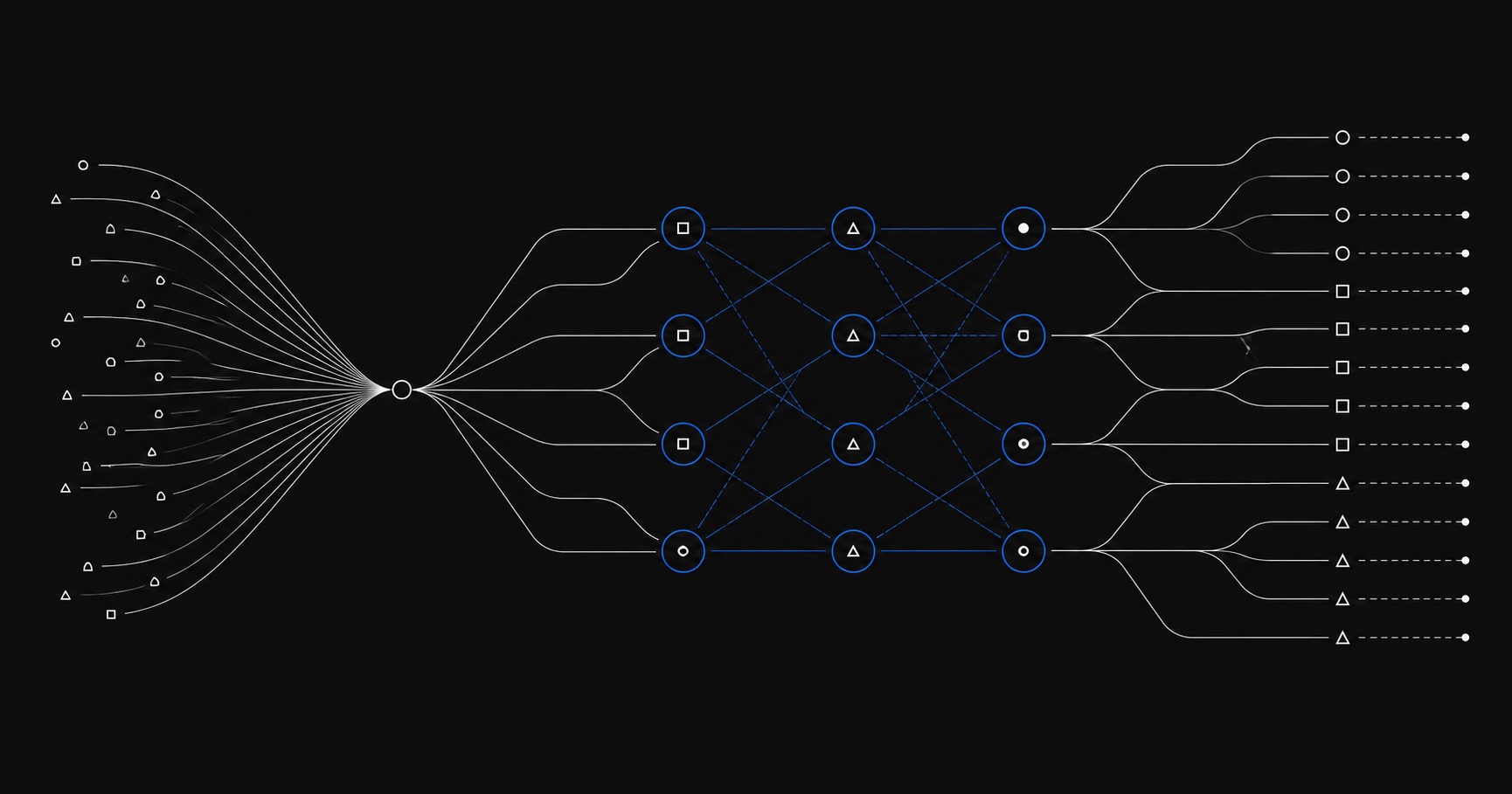
TL;DR: Most founders imagine AI as a tool they use. The intelligence layer is different, it's a system that works while you don't. This post isn't abstract. It's a concrete walk through what Tuesday morning looks like when coordination, follow-up, decision-routing, and status-tracking are handled by systems instead of people.
Let's skip the theory.
You've read enough about what AI could do. You don't need another post about potential. You need to see it running, what it actually looks like inside a business where the intelligence layer is live.
So here's Tuesday morning. Two versions.
Tuesday morning, version one
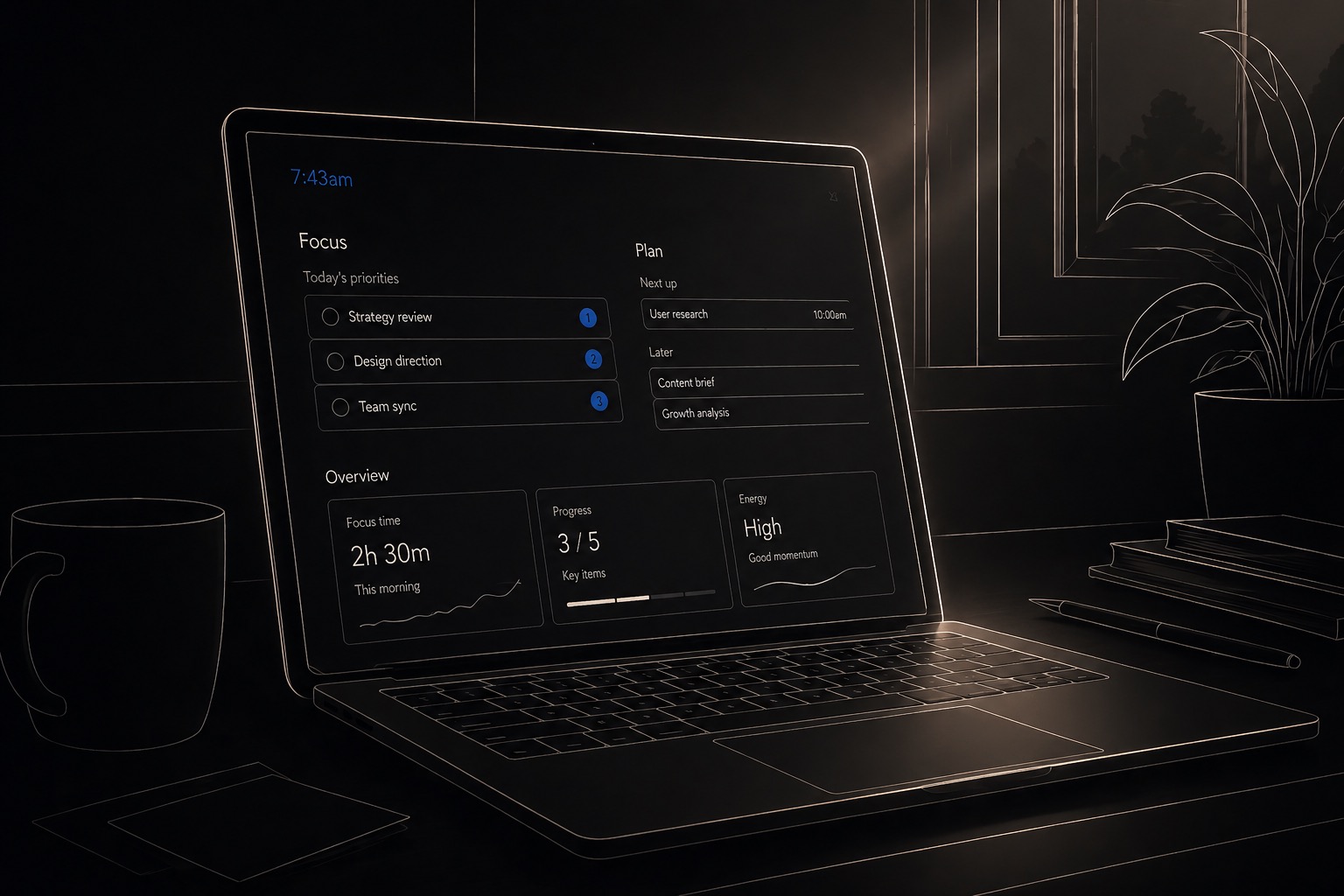
7:43am. You open your laptop.
Slack has 34 unread messages. Eleven of them are people asking where things stand. Four are people waiting on a decision that was supposed to happen last week. Two are contractors asking the same question that was answered in a thread nobody can find now.
Your email has a proposal you sent eight days ago that hasn't been followed up. A client update you meant to send Thursday. Three invoices someone needs approved before the accounts team can process payroll.
You have three hours before your first call. You will spend two of them moving these things an inch forward. You will end the day with a list that's longer than this morning's.
This is not a bad business. This is most businesses.
Tuesday morning, version two
7:43am. You open your laptop.
Your system has already been running for four hours.
The proposal from eight days ago got a follow-up at day five, automatically, personalised to the conversation, flagged to you only when a response came in. There's a response. It's positive. It's been tagged, summarised, and a suggested next step is waiting for your approval.
The contractor question, the one that gets asked every project, was answered by the system at 11pm last night, pulled from the documentation written after the last time it came up. The contractor didn't have to wait. You didn't have to explain it again.
The three invoices were routed to the right approver based on value thresholds that were set up once, two months ago. Two were approved automatically. One tripped a limit and was escalated to you with context, why it's over threshold, what the project is, what the approval history looks like.
Your Slack has six messages. Five are things that need you. One is a summary of everything that was handled while you slept.
You spend the next two hours on the work that actually needs you.
This isn't the future. This is what the intelligence layer looks like when it's running.

What the intelligence layer actually coordinates
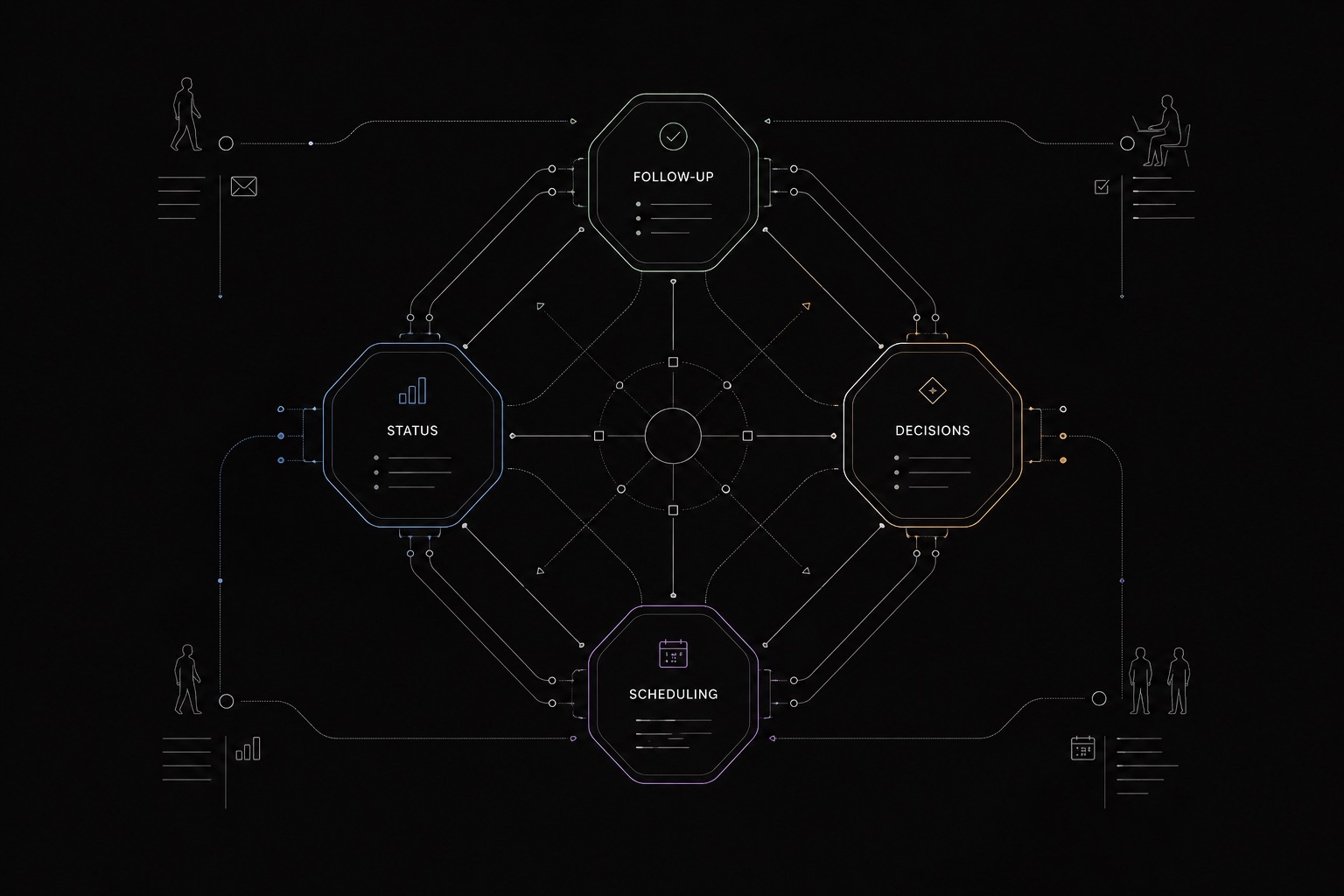
The gap between version one and version two isn't magic. It's architecture. Here's what's running:
Agents that follow up so you don't have to
An agent isn't a chatbot. It's a system that receives a goal, "follow up on open proposals after 5 days if no response", and executes it. It knows which proposals are open. It knows when they were sent. It drafts the follow-up in your voice, based on the original conversation. It sends it at the right time. It logs the response. It surfaces the outcome when you need to act.
You set the rule once. The agent runs it forever.
For a business that sends 30 proposals a month, this is the difference between a 40% follow-up rate and a 100% follow-up rate. That gap, across a year, is revenue, not process improvement.
Status that exists without being chased
The question "where does this stand?" costs more than the answer. Someone has to ask. Someone has to stop what they're doing to respond. The response goes into a thread that three other people then read to catch up.
The intelligence layer maintains status as a live property of every project and task. It knows what's waiting, what's moving, what's blocked. When you need to know, or when a decision depends on it, the status is already there.
Nobody got interrupted to produce it.
Decision routing that knows the difference
Not all decisions are the same. Some need you. Most don't.
The intelligence layer distinguishes between decisions that are routine and precedented, route those automatically, or make them, and decisions that are genuinely novel or high-stakes, escalate those with context.
The accounts team doesn't need you to approve a £400 supplier invoice. The system knows the threshold. It approves and logs. If the invoice is £40,000, or from a new supplier, or coded to the wrong project, then it comes to you, with everything you need to decide in thirty seconds.
The default becomes: handled. The exception becomes: human required.
Scheduling and follow-through without a coordinator
Every project has tasks that depend on other tasks. When task A finishes, task B starts. When the client approves the brief, the build schedule adjusts. When a milestone slips, the downstream timeline updates and the right people are notified, not in a meeting, not in a Slack thread, but in a single, clear update that tells each person exactly what changed for them.
No coordinator. No project manager whose entire job is keeping the GANTT chart honest.
The thing most people miss
When founders first see this, they usually ask: "But won't something fall through the cracks?"
It's the wrong question. What falls through the cracks now, with humans as the coordination layer, is already substantial. Proposals not followed up. Decisions delayed. Knowledge lost. Projects stalled while someone tracks down a status.
The intelligence layer doesn't eliminate error. It makes the system visible, so errors surface faster, with context, instead of sitting silently until they become problems.
The second thing people ask: "Won't our team feel replaced?"
Also the wrong question. The work that gets moved to the intelligence layer, status chasing, routine follow-up, decision routing, is the work your team hates most. Nobody got into account management because they love chasing invoice approvals. Nobody joined your operations team to answer the same contractor question for the fourth time this year.
The intelligence layer handles the tax. It frees your team for the work that actually uses them.
This isn't about the technology
The most important decision isn't which AI model to use. It isn't which automation platform to run.
It's the architectural decision: what should always require a human, and what should never need one again?
Founders who've built the intelligence layer describe the same shift. Not "AI is doing our work now." More like: "We finally built the version of our business that we always meant to build."
That's not a technology story. It's a design story.
The technology just makes it possible.
If version two of Tuesday morning sounds like something you're ready to build, let's scope it. We'll map your coordination tax, identify where the intelligence layer starts, and have a plan in 30 minutes.
Next in the series: Documentation is automation
Previous: Your business runs on a coordination tax
Stop explaining it to people
who don't get it.
Tell us what you want to build. We'll tell you if we can build it, what it costs, and when it ships — in one 30-minute call. Written build plan in your inbox within 24 hours.
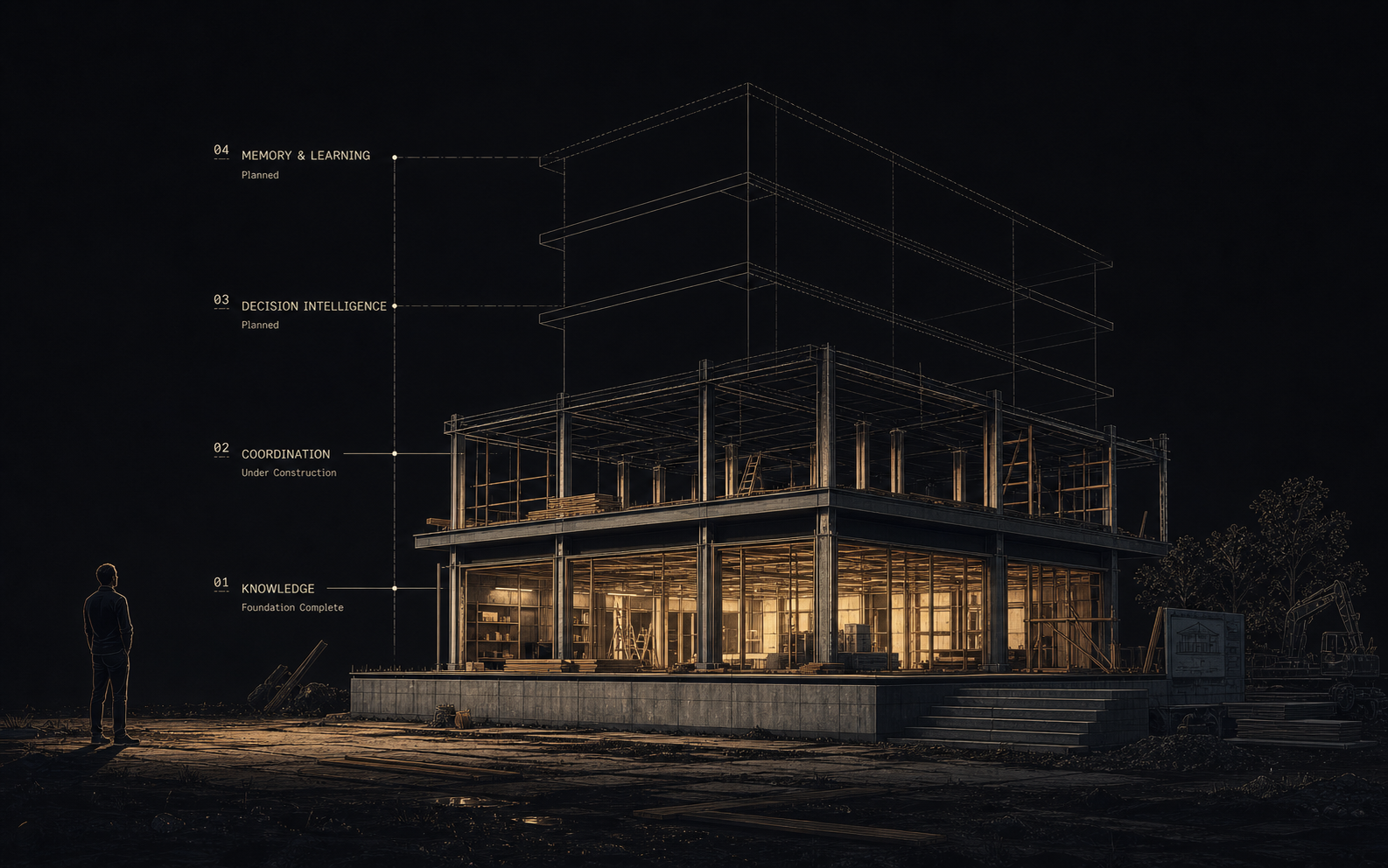
How to build the intelligence layer in a business that's already running
You don't need a greenfield rebuild to install an intelligence layer. You need a starting point, a sequencing logic, and the discipline not to try to automate everything at once. This post maps the practical path.
The business that learns: how AI memory turns your operations into a moat
Most AI systems are stateless, every interaction starts fresh. The intelligence layer is different. It accumulates memory: what worked, what didn't, what each client needs, how each project type behaves. Over time, this memory becomes a compounding advantage.