How to build the intelligence layer in a business that's already running

TL;DR: You don't need a greenfield rebuild to install an intelligence layer. You need a starting point, a sequencing logic, and the discipline not to try to automate everything at once. This post maps the practical path, where to start, how to sequence, what to build first, and how to avoid the mistakes that cause most intelligence layer projects to stall before they deliver.
The question we hear most, from founders who've read this far, is some version of:
"This makes sense. But we have systems. We have a team. We have processes, some written down, most not. We're not starting from scratch. Where do we actually begin?"
It's the right question. And the honest answer is: you don't start by transforming everything. You start by finding the one place where the coordination tax is highest, the rules are clearest, and the first agent can run without touching anything critical.
Then you build from there.
The four-layer architecture
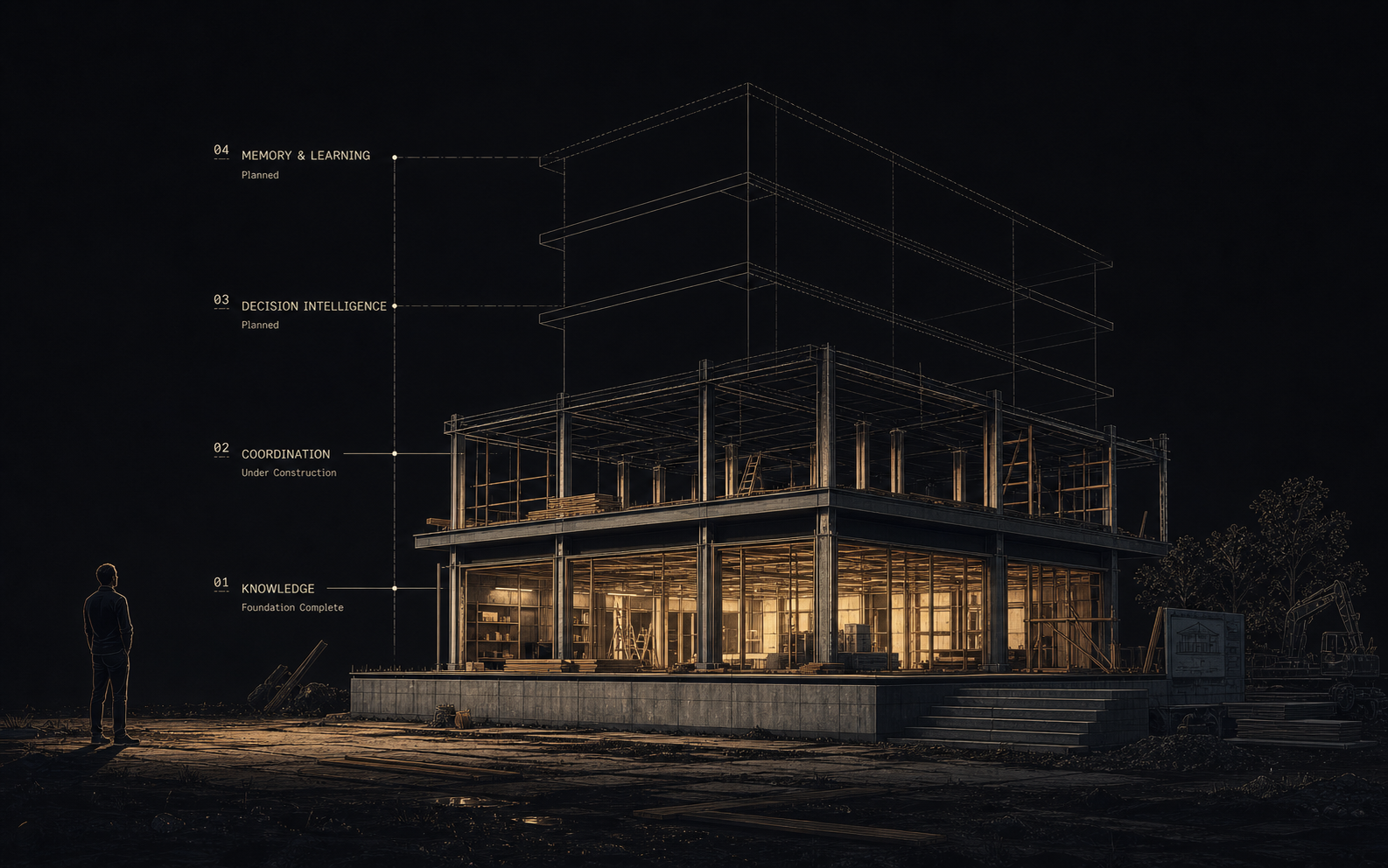
Before the starting point, the map. The intelligence layer isn't a single system, it's four interconnected layers that build on each other. Understanding the sequence matters because each layer is a prerequisite for the one above it.
Layer 1: Knowledge What exists in your business that systems can act on
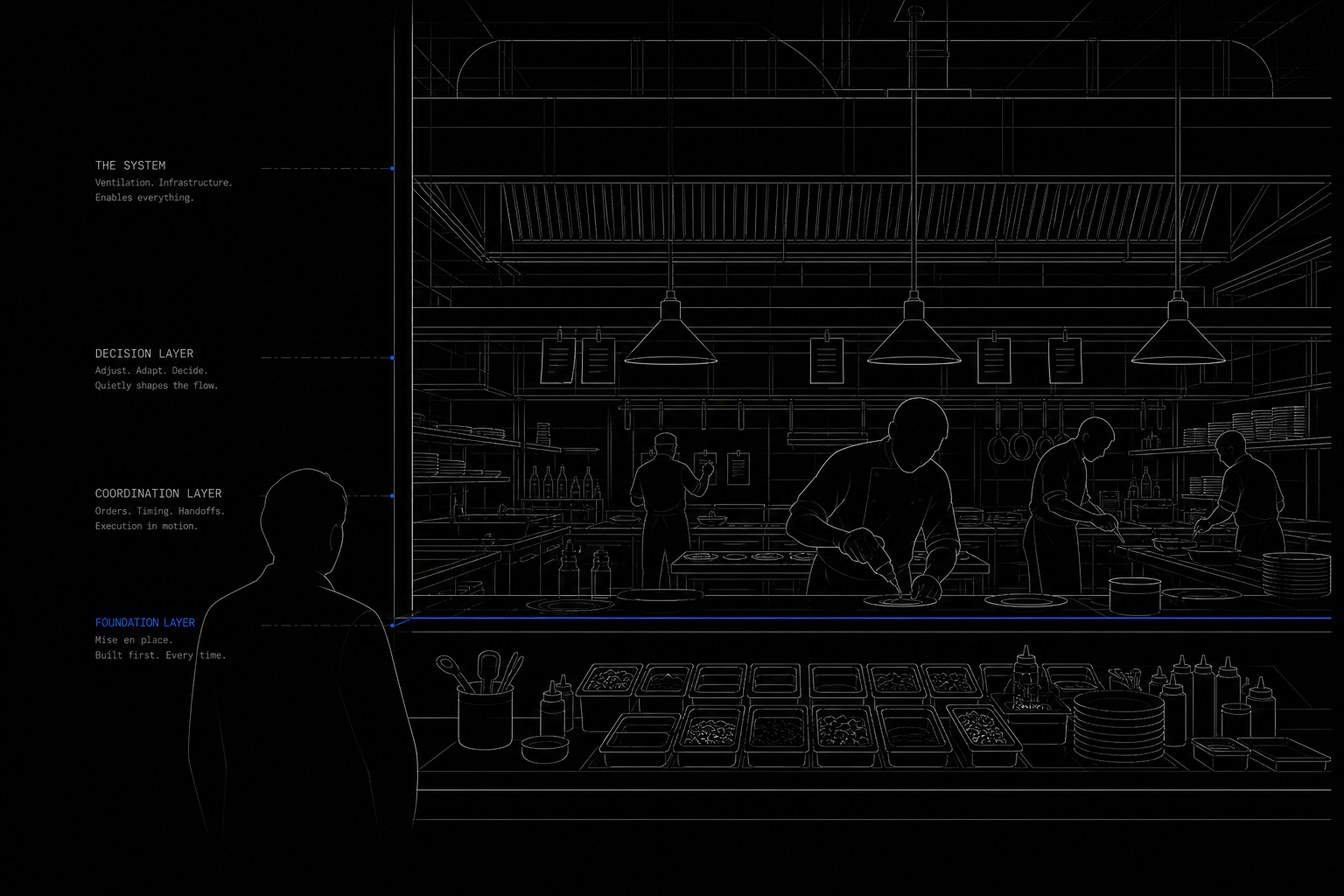
The foundation. Documented processes. Decision rules. Client context. Project patterns. Without this layer, agents have nothing to work with. You cannot automate judgment you haven't articulated.
Most businesses are 30, 40% documented and 60, 70% tribal knowledge. Before you build anything else, you need to shift that ratio, at least in the areas you're going to automate first.
Layer 2: Coordination The systems that keep things moving without human intervention
Follow-up agents. Status monitoring. Task routing. Scheduling logic. This is where most businesses start, because it produces visible, fast results. The coordination overhead drops immediately. The founders reclaim their time. The first ROI is clear.
Layer 3: Decision intelligence The logic that routes routine decisions automatically and escalates the right ones
Built on top of the knowledge layer, you need explicit rules before you can automate them. The decision intelligence layer handles the routine approvals, routings, and triage that were consuming human attention. It also assembles the context for genuine judgment calls.
Layer 4: Memory and learning The layer that makes the system get smarter over time
The highest-value layer and the last to build, because it requires the other three to be running and generating data before the learning has anything to work with. This is the moat. This is what makes the intelligence layer more valuable at 12 months than at 1.
The starting point: find your highest-tax process
You're not going to build all four layers at once. You're going to find one process, in one part of your business, where the coordination tax is highest and the rules are clearest.
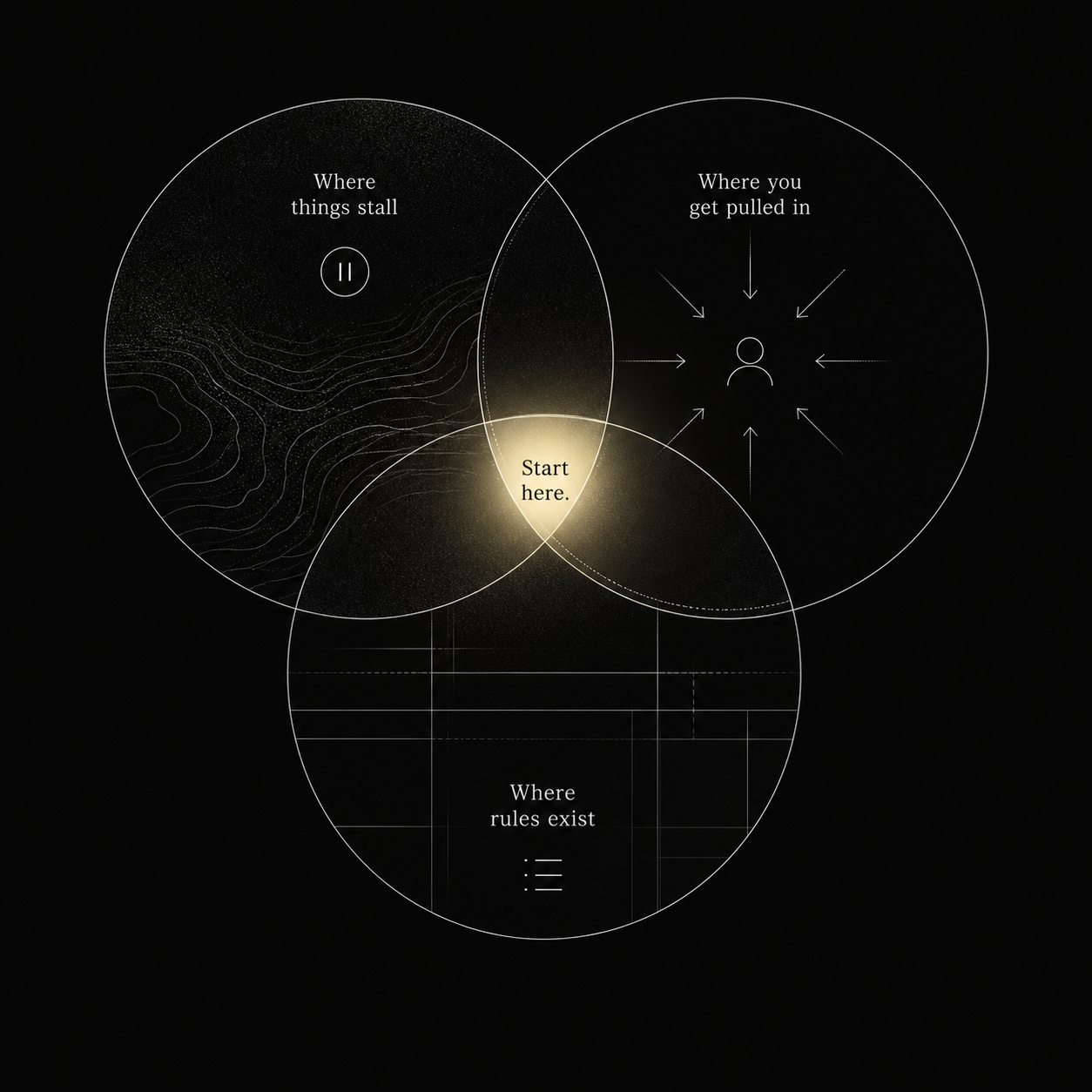
To find it, ask three questions:
1. Where do things stall most often? Not because the work is hard. Because someone hasn't replied, or a status isn't known, or a decision is waiting. This is where coordination overhead is highest.
2. Where do you personally get pulled in most for routine work? The approvals, the follow-ups, the "can you just check on" requests. Your personal involvement is the most expensive coordination tax in the business.
3. Where do you have, or could quickly have, the rules written down? Automation requires explicit logic. The processes with the clearest rules are the fastest to automate.
The intersection of these three, high stall rate, founder involvement, clear rules, is your starting point.
The first build: a coordination agent
For most businesses, the first intelligence layer component to build is a coordination agent, a system that handles the most common, most repetitive coordination work in your highest-tax process.
It doesn't need to be complex. The first agent we build for most clients does one thing well:
It knows what's open, knows what's due, and acts on it without being asked.
For a professional services firm: that's open proposals and client deliverables. For an e-commerce operation: that's open returns and supplier communications. For a scaling startup: that's open tasks and project dependencies. For a real estate business: that's open leads and follow-up sequences.
The first agent doesn't transform the business. It proves the model. It shows the team what a system that acts looks like. It generates the first data that the memory layer will eventually learn from.
And critically: it takes load off the person currently doing that work manually.
That's the result that earns the next conversation about what to build second.
The sequencing logic
Once the first agent is running, sequencing matters.
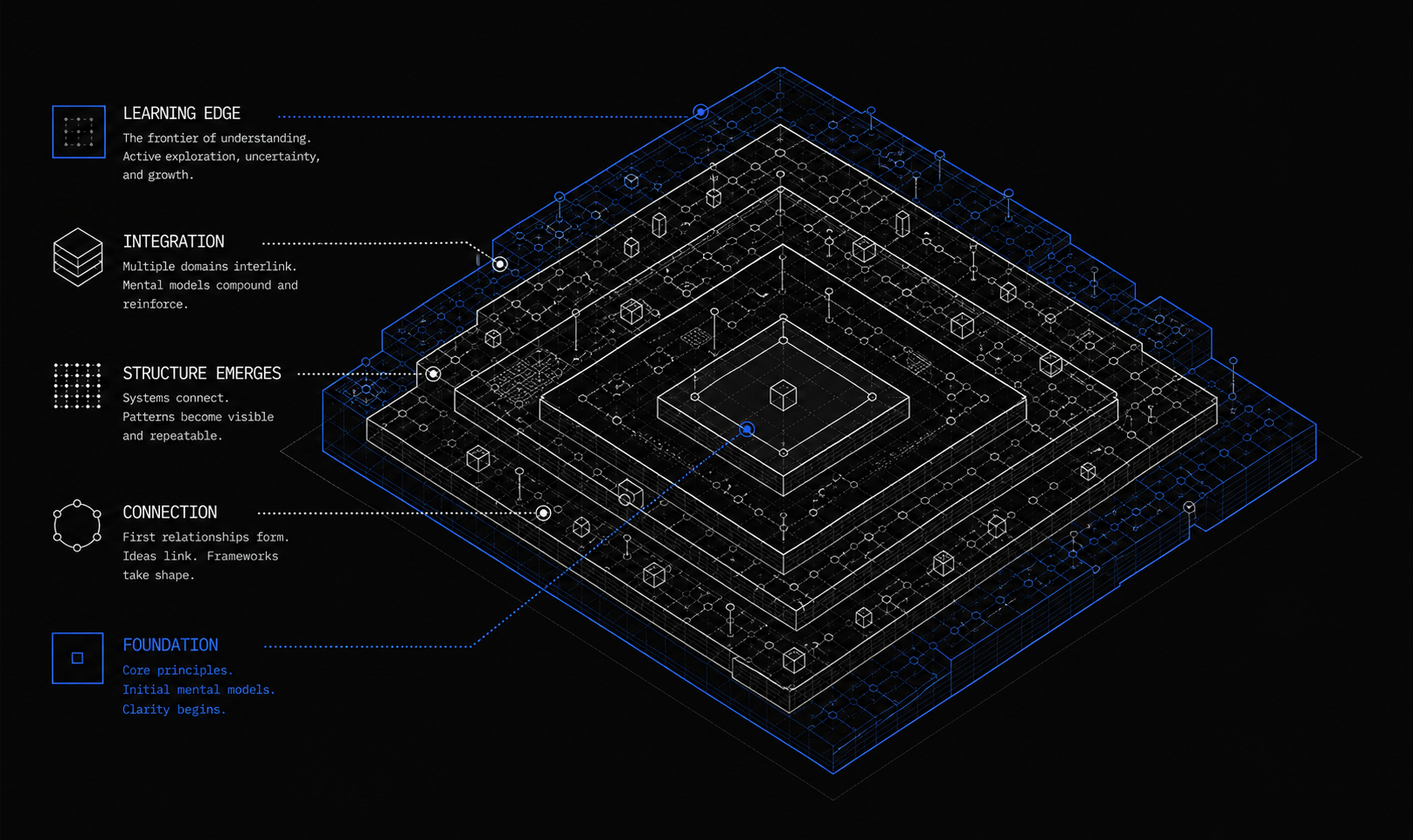
Don't build wide before building deep. The temptation is to automate many things at once. Resist it. One agent running reliably is worth more than five agents running poorly. Build the first one until it's solid, it's trusted, and its outputs are consistently right. Then expand.
Build the knowledge layer in parallel, not before. You don't need perfect documentation to start. You need good-enough documentation for the process you're automating first. Document as you go, as you find the edges, the exceptions, the judgment calls that weren't obvious, and the knowledge layer grows naturally.
Add decision intelligence when you've seen the patterns. Decision logic is best designed after you've watched the coordination layer run for a few weeks. The patterns in what escalates, what doesn't, and what should be handled differently will be obvious in a way they weren't at the start.
Memory is a design choice, not an afterthought. Every agent, every workflow, every decision should log its inputs, logic, and outcomes from day one, even before you're actively using that data. The memory layer you build in month six will be better for having three months of history to learn from.
The mistakes that stall most projects
Most intelligence layer projects don't fail at the technology. They fail at one of three points:
Trying to automate everything at once. Scope creep is the single biggest killer of intelligence layer projects. The scope that felt reasonable in a planning meeting becomes overwhelming in execution. The first build should be deliberately narrow, one agent, one process, clear success criteria. Everything else is phase two.
Building on undocumented processes. If the logic lives in someone's head, the agent will reflect the gaps. The first sign is usually: the agent is right 80% of the time and nobody can explain why it's wrong 20% of the time. The fix is always documentation, making the exceptions explicit before the system is expected to handle them.
Skipping the human review period. Even a well-designed agent shouldn't run unsupervised on day one. The first two weeks should include a human reviewing every output, not to catch errors for their own sake, but to find the edge cases that the initial design didn't anticipate. Those cases become documentation. That documentation makes the agent better.
Measuring the wrong thing. The temptation is to measure outputs, emails sent, decisions made, tasks completed. The right measure is time reclaimed and quality maintained. Is the founder spending fewer hours on coordination work? Is the output quality at least as good as the manual process? Those are the metrics that justify the next phase.

What 'done' looks like, and what it doesn't
The intelligence layer is never finished. That's a feature, not a bug.
A finished automation project is static. It does what it was built to do, forever, until it breaks.
The intelligence layer is a living system. It gets better as the business adds more history, refines more rules, and layers more memory. The version running in month twelve is genuinely more valuable than the version in month one, not because anyone updated it, but because it's learned.
"Done" for the first phase means: the first agent is running reliably, the founders have reclaimed time from the highest-tax process, and the data is accumulating for the next phase to build on.
That's the starting point. The rest builds from there.
The honest starting conversation
The businesses that build intelligence layers well usually start with one conversation where the founder is honest about three things:
Where the coordination tax is actually costing them, not in the abstract, but in the specific Monday morning moments that feel like slow suffocation.
What they're afraid the automation will miss, the judgment calls, the client nuances, the things that seem un-automatable but might just be undocumented.
What they want to protect, the parts of how the business operates that are genuinely human and should stay that way.
That conversation shapes the architecture. It determines what gets built first, what gets built second, and what never needs to be automated at all.
It's the conversation we have on every scoping call.
If you've read this far, you're not looking for another tool to try. You're looking for a system to build. That's what we do, intelligence layer architecture, built to your business, shipped in five weeks. Let's have the starting conversation.
Previous: The business that learns
Start the series: Your business runs on a coordination tax
Stop explaining it to people
who don't get it.
Tell us what you want to build. We'll tell you if we can build it, what it costs, and when it ships — in one 30-minute call. Written build plan in your inbox within 24 hours.
The business that learns: how AI memory turns your operations into a moat
Most AI systems are stateless, every interaction starts fresh. The intelligence layer is different. It accumulates memory: what worked, what didn't, what each client needs, how each project type behaves. Over time, this memory becomes a compounding advantage.
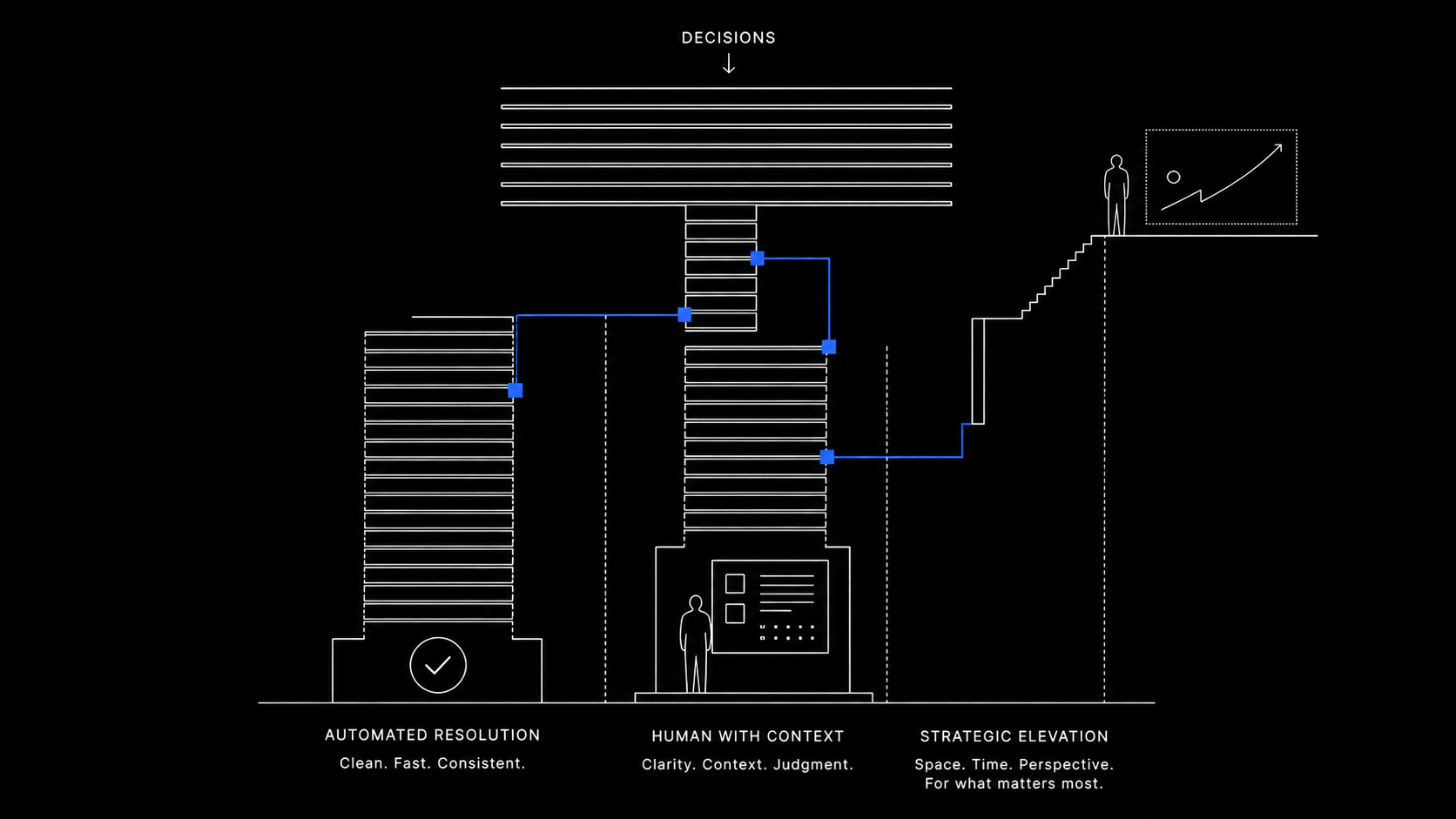
Decision intelligence: the decisions your business makes 50 times a day that should never need a human
Most businesses have hundreds of routine decisions that consume human attention every day despite being entirely precedented. Decision intelligence is the architecture that handles these automatically, routes edge cases accurately, and reserves human judgment for decisions that actually need it.