Your business runs on a coordination tax. Most founders pay it forever.

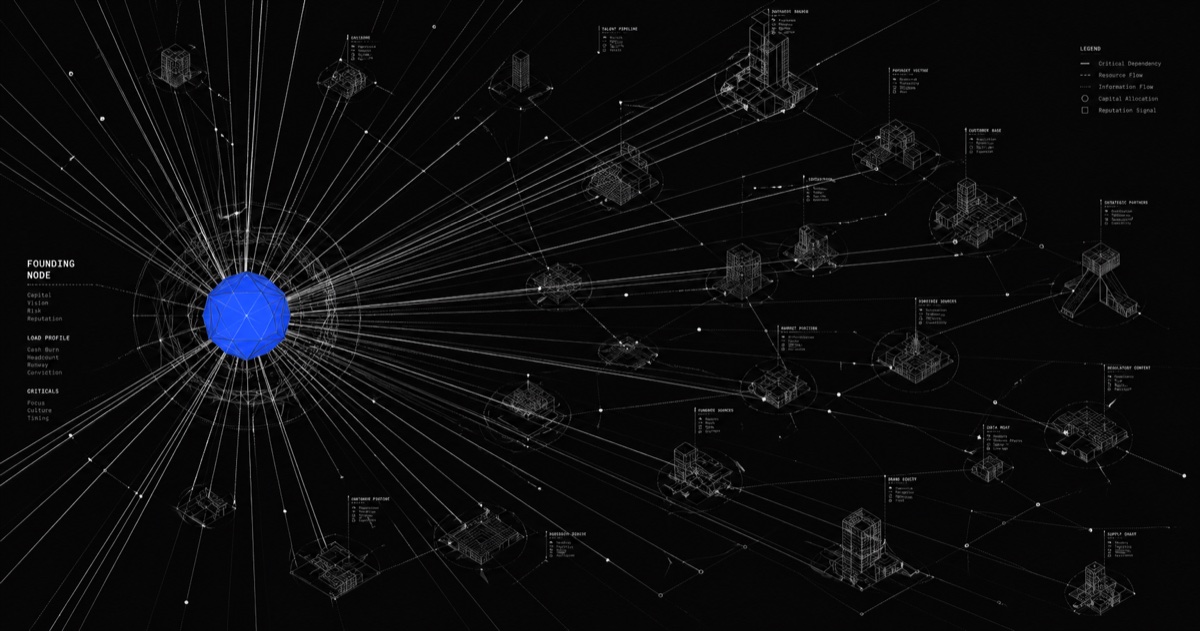
TL;DR: Every business has a coordination tax, the invisible overhead of chasing status, routing decisions, and keeping people aligned. Most founders absorb it personally. A few have started building the intelligence layer that eliminates it. This post names the tax, shows where it hides, and introduces the architecture that makes it optional.
You didn't start a business to be the person who follows up on things.
But here you are. Third follow-up on the proposal. Chasing the contractor for a status update. Sitting in a meeting that exists entirely because two people didn't have the same information. Answering a question your system should already know the answer to.
This isn't bad management. It's not a people problem. It's not even an AI problem, yet.
It's a structural problem. And it has a name.
The coordination tax
Every business pays it. Almost none of them measure it.
The coordination tax is the sum of every hour spent on work that exists only to manage other work. Status updates. Handoff emails. Reminder messages. Decision chains that stall because the right person wasn't looped in. Projects that slow down not because the work is hard, but because nobody knows who's doing what, or whether the last step actually finished.
It's not in your P&L. It doesn't show up in your team's job descriptions. But it's there, in every inbox, every Slack thread, every Monday morning standup that could have been a dashboard.
For a 10-person business, the coordination tax is usually 20, 30% of total working time. That's two to three people, fully employed, doing nothing but keeping everyone else aligned.
For a 50-person business, it's worse. The coordination surface area grows faster than the headcount.
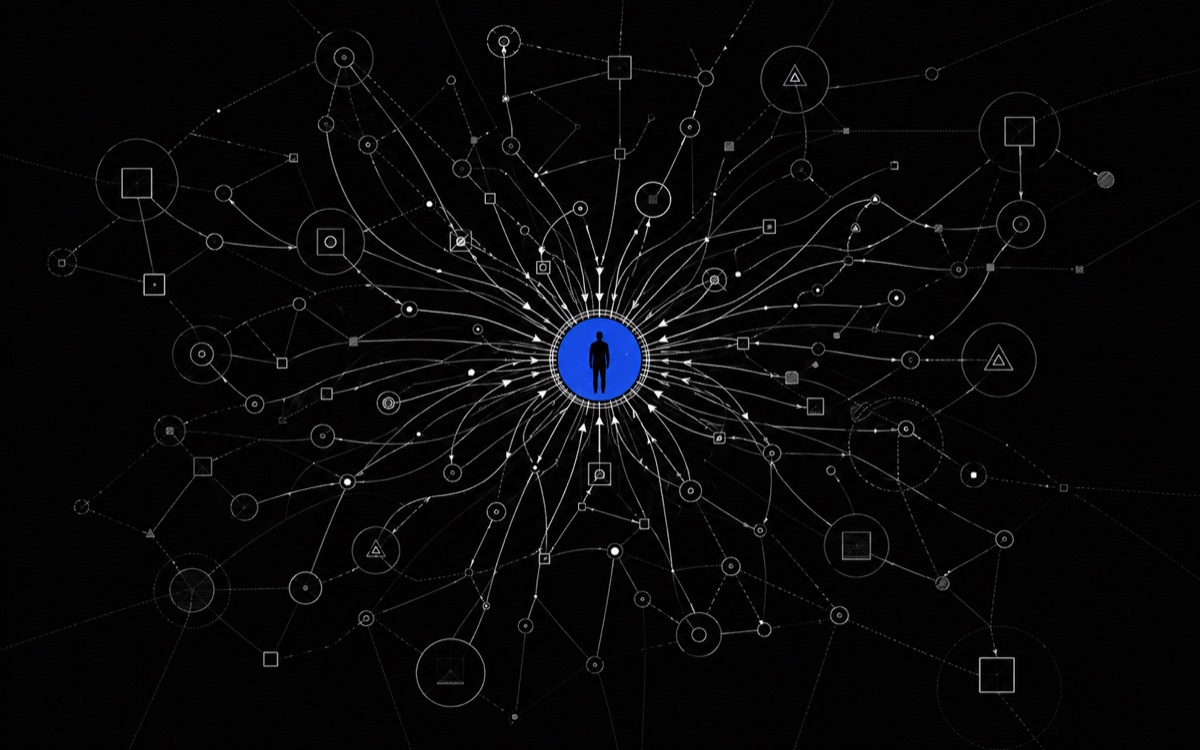
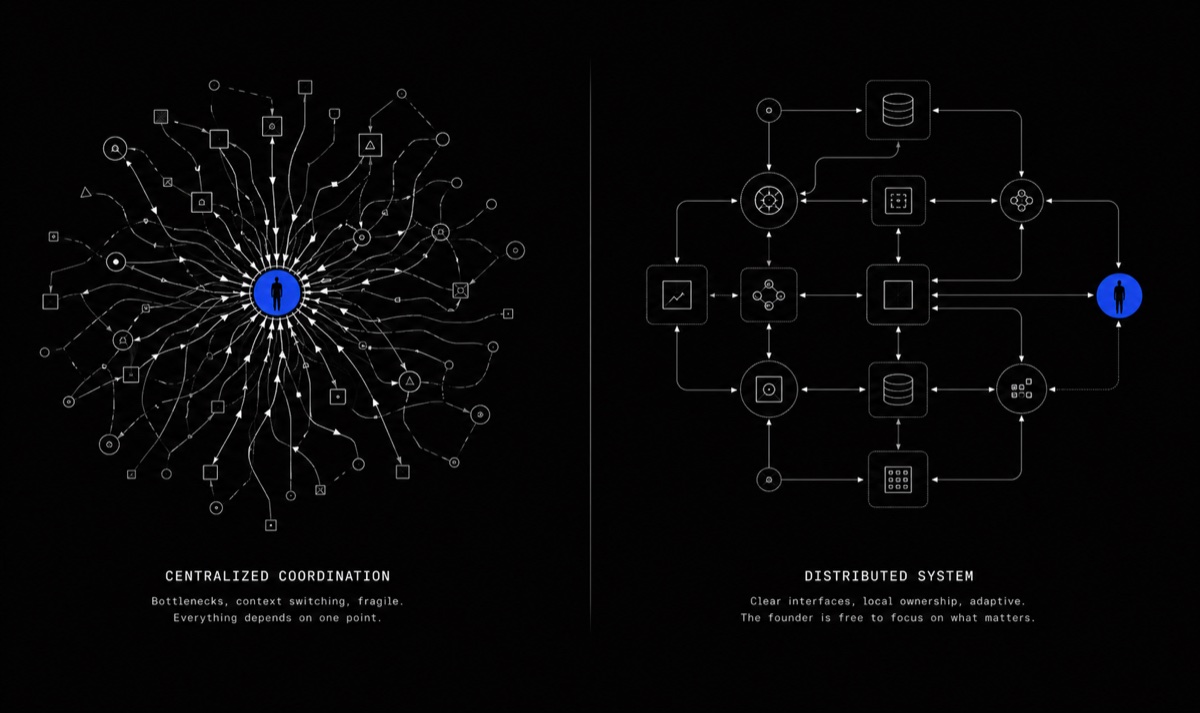
For a founder? The coordination tax falls on you personally. You become the intelligence layer, the human who holds the context, makes the calls, chases the updates, and keeps everything moving. You're not a bottleneck because you're bad at delegation. You're a bottleneck because you're the only system sophisticated enough to coordinate across everything.
That's the trap. And it scales exactly as well as you do.
Where the tax hides
Most founders recognise the coordination tax once they know to look for it. Here's where it lives:
In the question that needed an answer before anything could move. Someone needed to know the budget approval threshold. The project is sitting there, fully scoped, waiting. Three days pass. The answer was in a document nobody knew existed.
In the follow-up that should have been automatic. Proposal sent. No response after four days. Someone, usually you, has to remember to chase it. The follow-up is value-neutral work. It produces nothing except the information that was already owed.
In the status update that required a meeting. You needed to know where three things stood. Instead of a system that knows, you have a calendar event, three people's time, and a summary email nobody reads.
In the decision that waited for the right person. Low-stakes. Routine. Precedented. But it sat in someone's queue for a week because the person who usually makes that call was travelling.
In the knowledge that left when the person did. The contractor who knew how the integration worked. The account manager who understood what the client actually wanted. The operations lead who kept all the non-obvious stuff in their head. They left. The knowledge left with them.
Each of these is small. Together, they're the reason your business feels harder to run than it should.
This isn't new. The solution is.
Coordination overhead is as old as organisations. What's changed in the last two years isn't the problem, it's the economics of solving it.
Until recently, eliminating coordination tax required one of three things: more headcount (expensive), better processes (slow, fragile), or a founder who worked 70-hour weeks (unsustainable).
The fourth option didn't exist at useful scale. Now it does.
An intelligence layer is a set of interconnected systems, agents, memory, decision logic, that handles coordination work automatically. Not as a chatbot. Not as a search tool. As an active participant in how your business runs.
It follows up when no one else does. It knows the status without being asked. It routes decisions to the right person, or makes them itself, when the decision is routine enough. It remembers what happened on the last project so this project doesn't start from scratch. It surfaces information before someone has to ask for it.
It is, in other words, the thing you've been trying to be, without the cost of having it be you.
The intelligence layer isn't AI. It's architecture.
Here's the framing that matters most, and most people get wrong.
The intelligence layer isn't a product you buy. It isn't a subscription you turn on. It isn't ChatGPT with a company logo on it.
It's an architectural decision, a way of building the operational spine of your business so that coordination happens automatically, decisions get made at the right level, and knowledge compounds instead of disappearing.
Some of it is AI. Some of it is workflow logic. Some of it is, counterintuitively, documentation, because a process that's written down can be automated, and a process that lives in someone's head cannot.
The businesses building this now aren't the ones with the biggest AI budgets. They're the ones with the clearest thinking about what humans should and shouldn't be doing.
The ones who are still paying the coordination tax in full? They're not behind on technology. They're behind on that thinking.
What comes next in this series
This series, Invisible Infrastructure, is built for founders and operators who are ready to stop being the coordination layer.
Each post goes one layer deeper:
- What an intelligence layer actually looks like a concrete Tuesday morning, before and after
- Documentation is automation why the missing piece isn't AI, it's the knowledge you haven't captured yet
- Agents don't answer questions. They finish work. what AI agents actually do in a running business
- Decision intelligence the 50 daily decisions that should never need a human
- The business that learns how memory compounds, and why this is the moat most founders don't see building
- How to build the intelligence layer in a business that's already running the practical starting point
None of this requires a greenfield rebuild. None of it requires a massive budget. All of it requires clear thinking about where human judgment is actually needed, and where it's just being used because nothing else was available.
That's what we're here to build.
Next in the series: What a business looks like when the intelligence layer is built
Stop explaining it to people
who don't get it.
Tell us what you want to build. We'll tell you if we can build it, what it costs, and when it ships — in one 30-minute call. Written build plan in your inbox within 24 hours.

How to build the intelligence layer in a business that's already running
You don't need a greenfield rebuild to install an intelligence layer. You need a starting point, a sequencing logic, and the discipline not to try to automate everything at once. This post maps the practical path.
The business that learns: how AI memory turns your operations into a moat
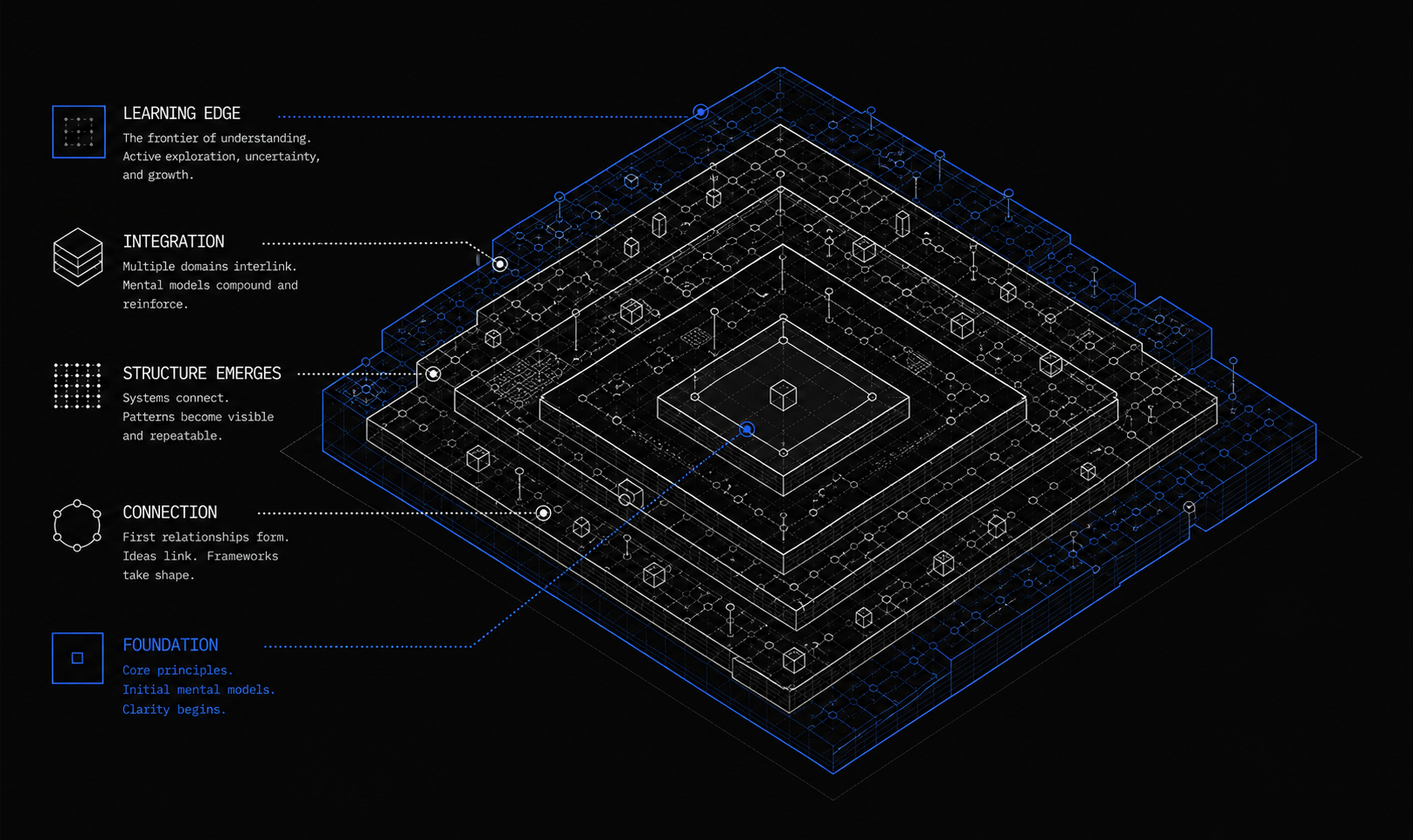
Most AI systems are stateless, every interaction starts fresh. The intelligence layer is different. It accumulates memory: what worked, what didn't, what each client needs, how each project type behaves. Over time, this memory becomes a compounding advantage.